


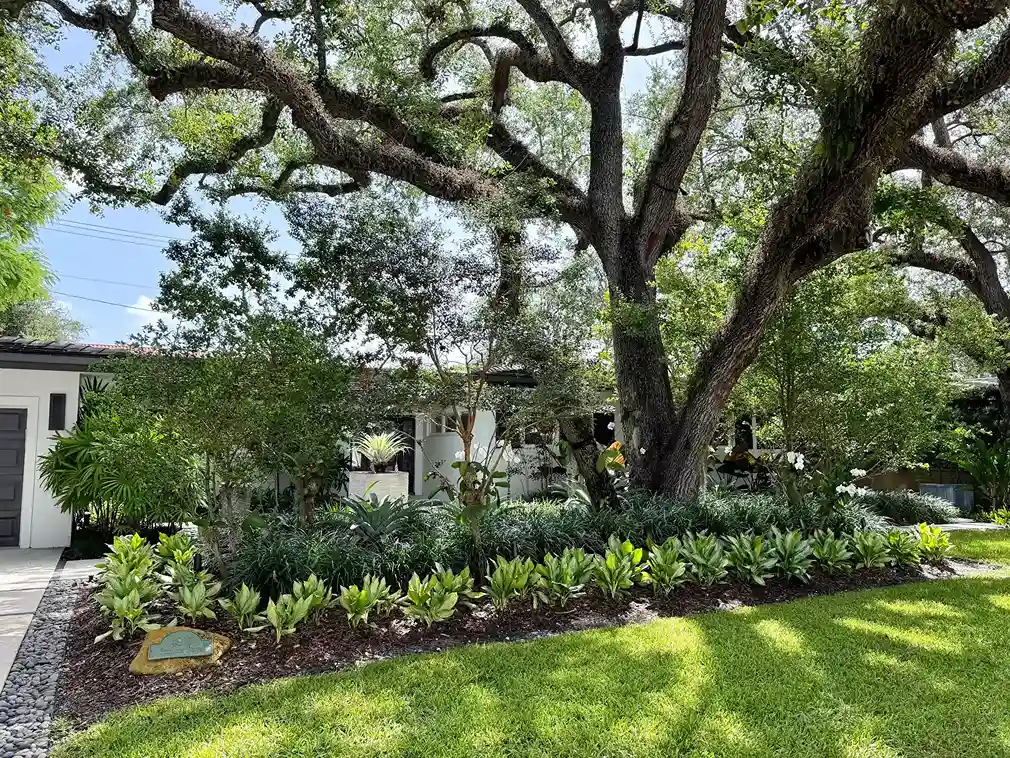
Miami’s year-round warmth makes it one of the best places in the country to create a vibrant outdoor living space. However, choosing the right plants is more than just selecting what looks beautiful. Your landscaping decisions directly impact maintenance costs, water usage, property value, and the long-term health of your landscape.
Whether you’re planning a complete landscape transformation or refreshing an existing yard, understanding the difference between native and tropical plants can help you make the right investment. At The Green Design Collective, every landscape is designed with your property’s unique conditions, aesthetic goals, and long-term sustainability in mind through professional landscape design, installation, planting, irrigation, outdoor lighting, and ongoing maintenance services.
What Are Native Plants?
Native plants are species that naturally evolved in South Florida over thousands of years. Because they are adapted to Miami’s soil, rainfall, humidity, and seasonal weather patterns, they typically require less irrigation, fertilizer, and maintenance once established.
These plants also provide essential habitat and food for local birds, butterflies, bees, and other beneficial wildlife. Their natural resilience makes them an environmentally responsible option for homeowners seeking a sustainable landscape. Florida-friendly landscaping principles also encourage using the “right plant in the right place” to improve landscape performance while conserving resources.
What Makes Tropical Plants So Popular in Miami?
Few places in the United States can successfully grow lush tropical landscapes quite like Miami. Tropical plants create the vibrant resort-style appearance that many homeowners envision, featuring bold foliage, colorful flowers, dramatic palms, and year-round visual interest.
Although tropical species thrive in South Florida’s climate, many require more irrigation, fertilization, pruning, and seasonal care than native alternatives. Proper plant selection and placement are essential for keeping tropical landscapes healthy while minimizing maintenance demands.
Which Option Requires Less Maintenance?
If minimizing yard work is your priority, native plants usually offer the greatest long-term value.
Because they evolved in Florida’s environment, they naturally tolerate local weather conditions, periodic drought, and many regional pests. After establishment, many native landscapes require significantly less supplemental watering and routine maintenance.
Tropical plants, while visually striking, often need:
- More frequent pruning
- Additional irrigation during dry periods
- Fertilization to maintain vigorous growth
- Regular monitoring for pests and diseases
For busy homeowners, native landscapes often reduce both maintenance time and ongoing landscaping costs.
Native Plants vs. Tropical Plants at a Glance
| Feature | Native Plants | Tropical Plants |
| Adapted to Miami Climate | Excellent | Excellent (with proper care) |
| Water Requirements | Low | Moderate to High |
| Maintenance | Low | Moderate to High |
| Wildlife Benefits | Excellent | Moderate |
| Bold Visual Appeal | Moderate | Excellent |
| Hurricane Resilience | Generally Better | Varies by species |
| Long-Term Cost | Lower | Higher |
Which Plants Add More Beauty to Your Property?
The answer depends on the style you’re trying to achieve. Native landscapes tend to offer a natural, elegant appearance that blends seamlessly with South Florida’s environment. They feature subtle textures, seasonal blooms, and rich biodiversity.
Tropical landscapes create dramatic curb appeal with oversized leaves, vibrant flowers, layered planting beds, and an unmistakable luxury feel.
Many of the most successful Miami landscapes actually combine both approaches. Landscape designers often integrate native trees and foundation plants with carefully selected tropical accent plants to create landscapes that are both beautiful and practical.
Can Native and Tropical Plants Grow Together?
Absolutely. This is one of the most effective strategies for Miami homeowners.Professional landscape designers frequently blend native and tropical species to balance appearance, sustainability, and maintenance requirements. Native plants establish the landscape’s ecological foundation, while tropical plants provide visual focal points and year-round color.
This hybrid approach delivers:
- Greater plant diversity
- Improved landscape resilience
- Reduced maintenance compared to fully tropical landscapes
- Enhanced curb appeal
- Better support for local wildlife
Which Plants Handle Miami Weather Better?
Miami landscapes face intense sun, high humidity, tropical storms, hurricane-force winds, and occasional periods of drought.
Native plants generally perform better because they naturally evolved under these exact conditions. Their deep root systems and regional adaptation often allow them to recover more quickly after severe weather events.
Some tropical species also perform exceptionally well, but others may experience damage during strong winds or require replacement after extreme storms. Selecting climate-appropriate species is essential for creating a durable landscape that continues to thrive year after year.
Is a Native Landscape Better for the Environment?
Yes, Native landscaping provides measurable environmental benefits by reducing water consumption, limiting fertilizer use, supporting pollinators, and improving local biodiversity.
Many Florida homeowners are increasingly choosing native plants as part of environmentally responsible landscape designs that also lower long-term maintenance expenses. Since native species naturally fit local ecosystems, they help restore habitats that urban development has reduced over time.
How Can Professional Landscape Design Help You Choose the Right Plants?
Selecting plants is only one part of creating a successful outdoor space.
An experienced landscape designer evaluates multiple factors, including:
- Soil conditions
- Sun and shade exposure
- Drainage
- Irrigation requirements
- Property layout
- Desired maintenance level
- Outdoor living goals
The Green Design Collective approaches every project with a customized strategy that combines thoughtful landscape design, professional installation, irrigation planning, outdoor lighting, premium plant selection, and ongoing landscape maintenance. Rather than recommending a one-size-fits-all solution, each landscape is tailored to complement both the property and the homeowner’s lifestyle.
Which Choice Is Right for Your Miami Property?
If your priorities are sustainability, lower maintenance, and supporting local ecosystems, native plants are often the strongest investment.
If you envision a luxurious tropical retreat filled with vibrant color and dramatic foliage, tropical plants may better match your goals.
For many Miami homeowners, the ideal solution combines both. A professionally designed landscape that integrates native and tropical species offers the best balance of beauty, durability, environmental responsibility, and long-term value.
Whether you’re creating a completely new landscape or renovating an existing property, working with experienced professionals ensures every plant is selected with your home’s unique environment in mind. The result is an outdoor space that remains beautiful, functional, and enjoyable throughout every season.
FAQs
Are native plants better than tropical plants for Miami homes?
Native plants are generally better for homeowners seeking lower maintenance, improved drought tolerance, and better support for local wildlife. Tropical plants are ideal if you want a lush, vibrant landscape with bold colors and foliage.
Do tropical plants require more maintenance?
Yes. Many tropical plants need more frequent watering, pruning, fertilization, and pest management compared to native plants, especially to maintain their appearance year-round.
Can I combine native and tropical plants in one landscape?
Absolutely. A combination of native and tropical plants creates a balanced landscape that offers visual appeal, environmental benefits, and manageable maintenance while thriving in Miami’s climate.
Which plants are more hurricane-resistant in South Florida?
Many native plants are naturally adapted to South Florida’s weather and often withstand strong winds and heavy rainfall better than some tropical species. Proper plant selection and placement are key to storm resilience.
How do I choose the right plants for my Miami property?
Consider factors such as sunlight, soil type, drainage, irrigation, maintenance preferences, and your desired landscape style. A professional landscape designer can recommend the best mix of native and tropical plants for your property.